
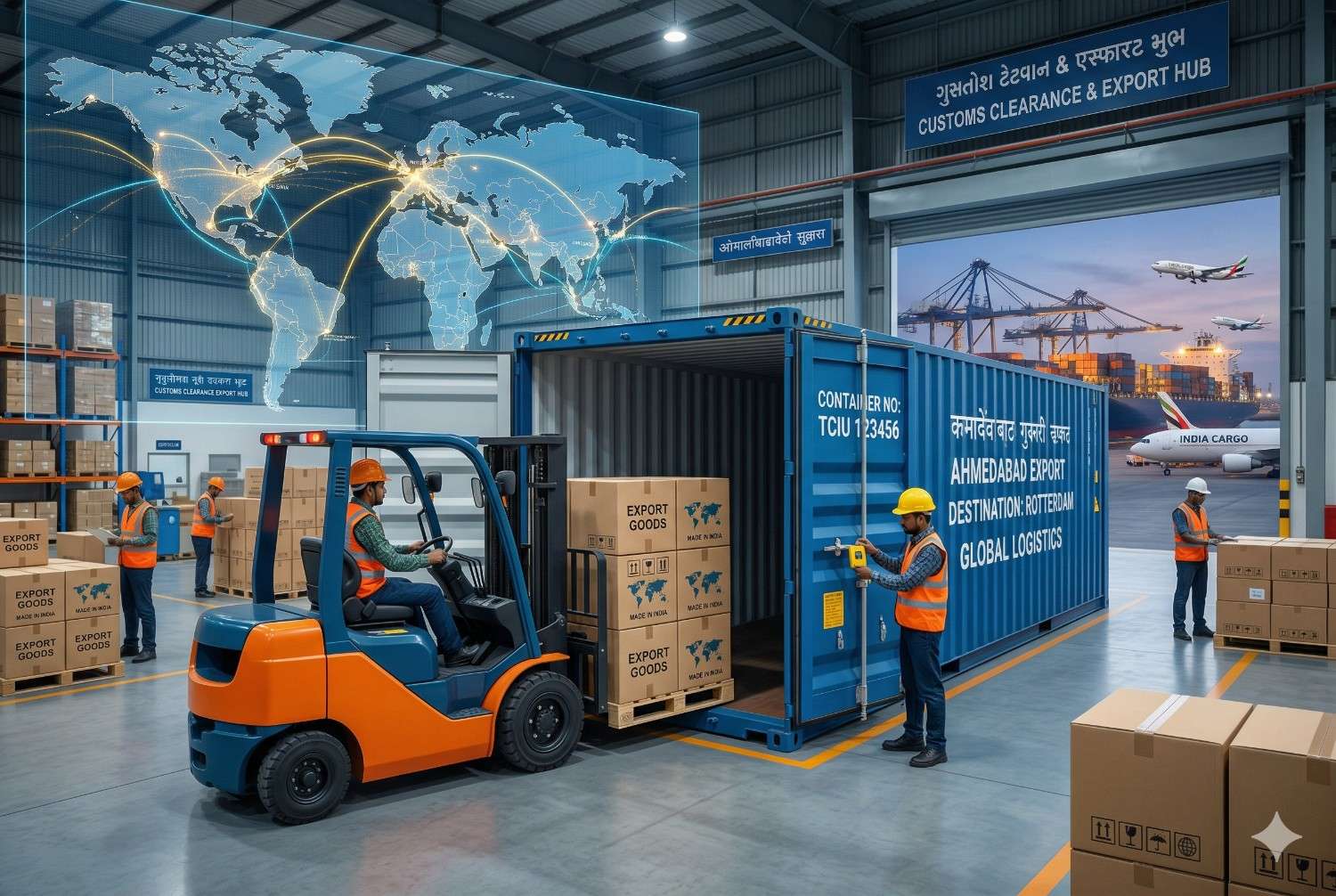
Factory Stuffing Permission Process – Complete Step-by-Step Guide for Exporter
Learn what Factory Stuffing Permission is, how it works, and why it benefits exporters. Discover the step-by-step process, types, and key advantages of stuffing goods directly from your factory to port under CBIC guidelines.
What is Factory Stuffing Permission?
Factory Stuffing Permission is a system that allows goods to be stuffed, sealed, and dispatched directly from the factory — instead of at ports or Inland Container Depots (ICDs). This not only saves time but also significantly reduces logistics costs and operational hassles.
This facility is governed by the Central Board of Indirect Taxes and Customs (CBIC).
What Factory Stuffing Permission Allows Exporters To Do

- Stuff export goods into containers at their factory premises
- Seal containers under self-sealing or customs supervision
- Transport sealed containers directly to port without additional handling
Key Benefits of Factory Stuffing

- Faster Export Clearance — Skip the queue at ports and ICDs; your goods move directly from factory to ship.
- Cost Savings — Eliminate extra handling, storage, and transportation charges.
- Reduced Risk of Damage — Fewer cargo movements mean fewer chances of damage or loss.
- Better Operational Control — Manage stuffing, sealing, and dispatch on your own schedule.
- Improved Efficiency for Bulk Exporters — Ideal for exporters dealing in large, frequent shipments.
Types of Factory Stuffing

1. Self-Sealing
- Exporter seals the container using an RFID e-seal
- No need for a customs officer to be present
- Faster and more efficient
2. Customs Supervised Stuffing
- A customs officer visits the factory
- Physical verification and sealing is done on-site
- Used in sensitive or specific cases
Step-by-Step Factory Stuffing Permission Process

Step 1: Application to Customs
Submit an application to your jurisdictional customs authority, including:
- Factory address
- Nature of export goods
- Frequency of exports
Step 2: Submission of Documents
Prepare and submit the following:
- Import Export Code (IEC)
- GST Registration Certificate
- Factory layout plan
- Product details
- Previous export records (if available)
Step 3: Factory Inspection
A customs officer inspects your premises and checks:
- Security arrangements
- Storage facilities
- Suitability of the stuffing area
Step 4: Grant of Permission
Upon successful verification:
- Your factory is officially approved for stuffing
- Permission is granted in writing
Step 5: Stuffing and Sealing of Goods
- Goods are packed and loaded into containers
- Container is sealed using either:
- RFID e-seal (self-sealing), or
- Customs seal
Step 6: Filing the Shipping Bill
- File the shipping bill through ICEGATE
- Mention factory stuffing details and the seal number
Step 7: Movement to Port
- The sealed container is transported directly to the port/ICD
- Minimal or no inspection required at the port
Conclusion
Factory Stuffing Permission is more than just a procedural facility — it is a strategic advantage for exporters. By enabling direct dispatch from factory to port, it helps businesses:
- Save costs
- Reduce delays
- Improve shipment reliability
In a competitive global market, adopting factory stuffing can significantly enhance your export efficiency and profitability.
